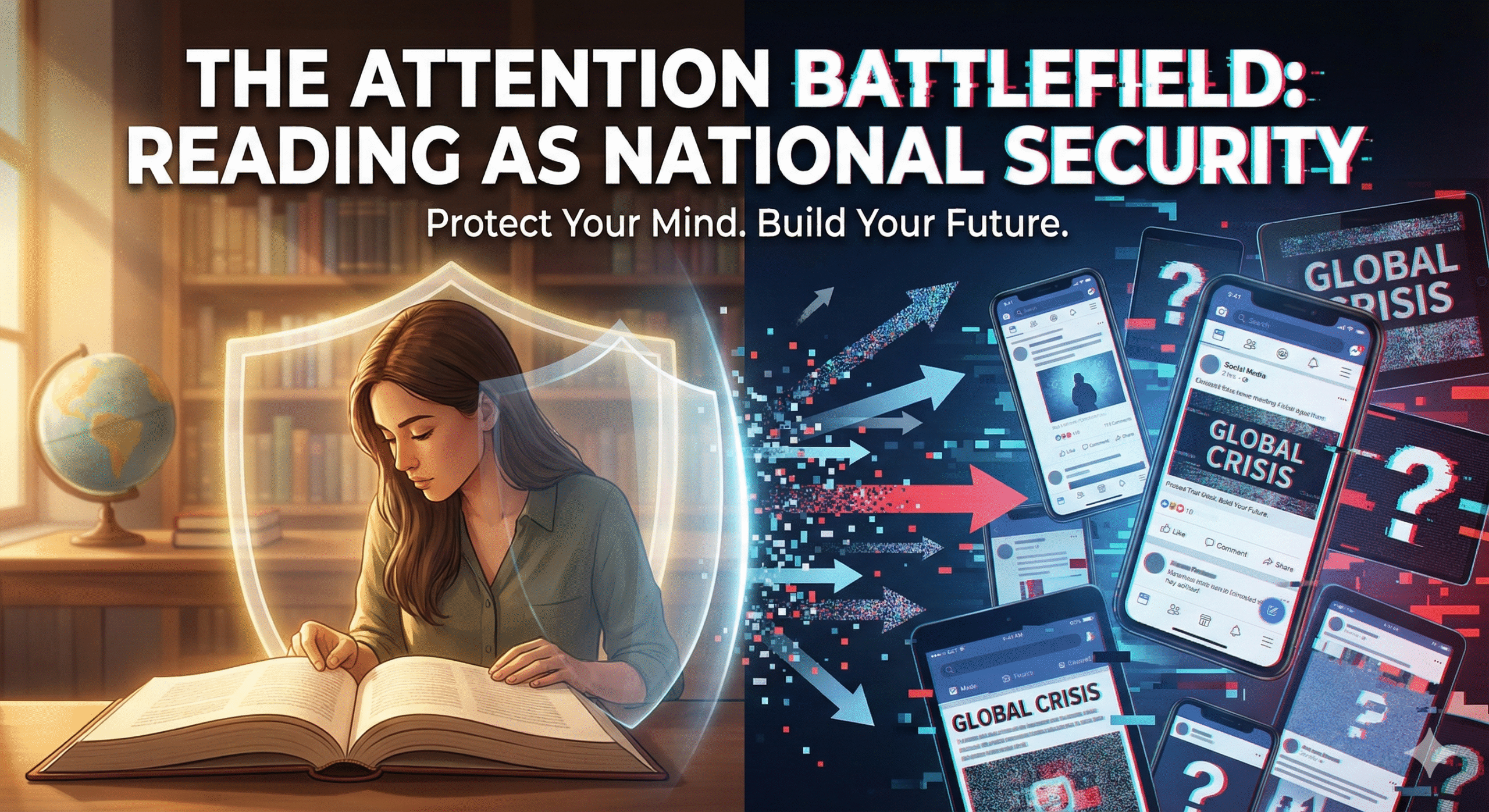
Reading: A National Security Issue The New Battlefield: Why Reading is Now a National Security Issue In the olden days, wars were fought with ships, spies, and weapons. Today, a new frontline has opened up: our attention spans. It sounds like the plot of a dystopian novel, but it is the reality facing governments worldwide. Recently, Bridget Phillipsson, the UK’s Education Secretary, made a startling declaration: the decline in reading is no longer just an educational challenge—it is a national security threat. Why are world leaders raising the alarm? And what does this mean for our schools, our homes, and our future careers? The Problem: A Crisis of Attention and Truth We live in an age where information is fast, answers are instant (thanks to AI), and patience is thin. The “attention economy” is booming, but our ability to focus is busting. According to a recent analysis by Vantage with Palki Sharma, the logic is terrifyingly simple: Children who do not read are easier targets for misinformation. When a generation loses the habit of “deep reading”—the ability to focus on a complex text for an extended period—they lose the critical thinking skills required to spot fake news. Governments argue that hostile actors are exploiting this vulnerability, spreading fake headlines that non-readers struggle to identify as false. The Research: The Numbers Don’t Lie The decline is not anecdotal; it is statistical. The “1 in 3” Reality: According to the National Literacy Trust (NLT), reading enjoyment has hit a historic low. Recent data indicates that only around 33% of children say they enjoy reading in their free time. This is the lowest figure recorded in two decades. The Gender Gap: The drop is even steeper among boys, who are ditching books for screens at a much faster rate than girls. The Link to Misinformation: Research by Kolinsky et al. (2022) found that individuals with lower literacy levels were significantly more likely to endorse conspiracy theories. Conversely, “critical reading” acts as a protective shield for the brain. Global Solutions: From the UK to Uttar Pradesh Governments are not just watching; they are acting. In the UK: The government is launching family reading drives and upgrading school libraries. Their motto? The antidote to disinformation is not more internet firewalls, but “more readers.” In India: The state government of Uttar Pradesh has introduced mandatory newspaper reading in government schools. For 10 minutes every day, students must read major news and editorials to reduce screen time and engage with reality. What Can We Do? We cannot wait for government mandates to save our attention spans. Here is the path forward: For Teachers: Bring back the newspaper. Dedicate 10 minutes of “device-free” time to read physical news. It grounds students in reality. For Students: Reading is one of the few activities that rewires your brain to be smarter and harder to fool. In a world of 15-second reels, having the attention span to read a book is a superpower. 🚀 A Challenge for Every Parent: Are You Ready for the Future? We talk about children needing to read more, but what about us parents? The biggest hurdle in career guidance today isn’t a lack of opportunities; it is a lack of awareness. Most parents only know about a handful of traditional careers (Engineering, Medicine, Law). But the world has evolved. There are now over 3,000 unique career paths—from AI Ethics to Sustainable Architecture—that didn’t exist a decade ago. If you don’t know a career exists, how can you suggest it to your child? We propose the “One Career a Day” Habit: The Resource: Access our library of 3000+ career paths. The Habit: Read just one career profile or success story daily. The Result: By the time your child needs guidance, you will be an informed mentor, not a worried parent. 📖 Access Career Library (3000+ Careers) Click above to start reading about future careers today. Conclusion The world doesn’t fit into a 280-character tweet. As Palki Sharma eloquently put it, “A book may not fight for your attention, but it definitely rewards it.” Let’s not lose the war for our minds. Tonight, put the phone down. Read a page. Whether it is a novel to build empathy or a career guide to build a future—just read. Written by: JAINODDIN MOHAMMAD Certified Career Analyst Ph. 9700449221
NextGen Career Labs
Shaping Tomorrow’s Careers Today ✨ Shaping Tomorrow Careers Today is a forward-looking initiative dedicated to empowering individuals with the skills, knowledge, and opportunities they need to thrive in a rapidly evolving world. By blending innovation, mentorship, and practical learning, it helps bridge the gap between today’s aspirations and tomorrow’s career demands—preparing people not just for jobs, but for meaningful, future-ready careers. NextGen Career Labs, we go beyond traditional education by blending career guidance, technology skills, business knowledge, and personality development into practical, hands-on learning experiences. Our programs help students discover their strengths, explore modern career paths, and build real-world competencies from an early stage. 🧭 Our Key Features Our Core Programs Career Foundation ProgramCareer awareness, aptitude exploration, goal setting, and future planning. Technology & CodingDigital literacy, logical thinking, basic coding, and technology fundamentals. Commerce & Business SkillsFinancial literacy, entrepreneurship basics, business awareness, and economic understanding. Communication & Personality DevelopmentConfidence building, public speaking, leadership skills, teamwork, and life skills. Skill-Based Learning Hands-on, activity-driven learning that focuses on practical skills beyond textbooks. Future-Ready Careers Preparing students with the mindset, skills, and clarity needed to succeed in modern and emerging careers. Our Approach Interactive and activity-based learning Age-appropriate curriculum Industry-relevant skills Experienced mentors and trainers Focus on confidence, clarity, and competence Benefits for Schools Career-focused value addition Improved student engagement Early career awareness Skill-based education support Stronger student outcomes Partner with NextGen Career Labs to prepare students for real-world success.
NextGen Career Labs
NextGen Career Labs | Premium Career Readiness for Schools NextGen Career Labs A Premium Value-Added Career Readiness Program for Progressive Schools Explore Career Lab Proposal School Partnership Enquiry Why Schools Need Career Differentiation Parents today expect schools to guide careers, not just academics. Career confusion after Class X, subject choices driven by pressure, and increasing competition among schools make differentiation essential. Schools offering structured career guidance build stronger trust, better retention, and long-term reputation. What is NextGen Career Labs? NextGen Career Labs is a premium, in-school career guidance and career readiness ecosystem designed to position schools as future-focused institutions. It is implemented alongside academics as a value-added program with no syllabus burden and minimal academic disruption. Core Pillars Scientific Career Assessment Aptitude, interest and personality analysis with clear subject-career alignment. Expert Career Counselling One-on-one and group counselling for stream and pathway clarity. Career Portfolio Development Skills, certifications, projects and achievements for future readiness. Career Exploration & Exposure Career clusters, emerging fields and expert interaction sessions. How It Works Discover: Understand strengths and interests Align: Map subjects, streams and careers Prepare: Build career portfolio and readiness Benefits For Students Career clarity, confidence and reduced stress. For Parents Clear roadmap, reduced anxiety and higher trust. For Schools Premium differentiation, stronger admissions, retention and reputation. “Partner with us and make your school future-ready and students career-ready.” We deeply appreciate your time and consideration and look forward to the possibility of a meaningful collaboration. Explore Career Lab Proposal School Partnership Enquiry Get in Touch 🌐 www.nextgencareerlabs.com | 🌐 www.nextgencareerguide.com 📞 9392418552 | 9700449221 ✉️ nextgencareerguide@gmail.com NextGen Career Labs – A Premium Value-Added Career Readiness Program WhatsApp Us
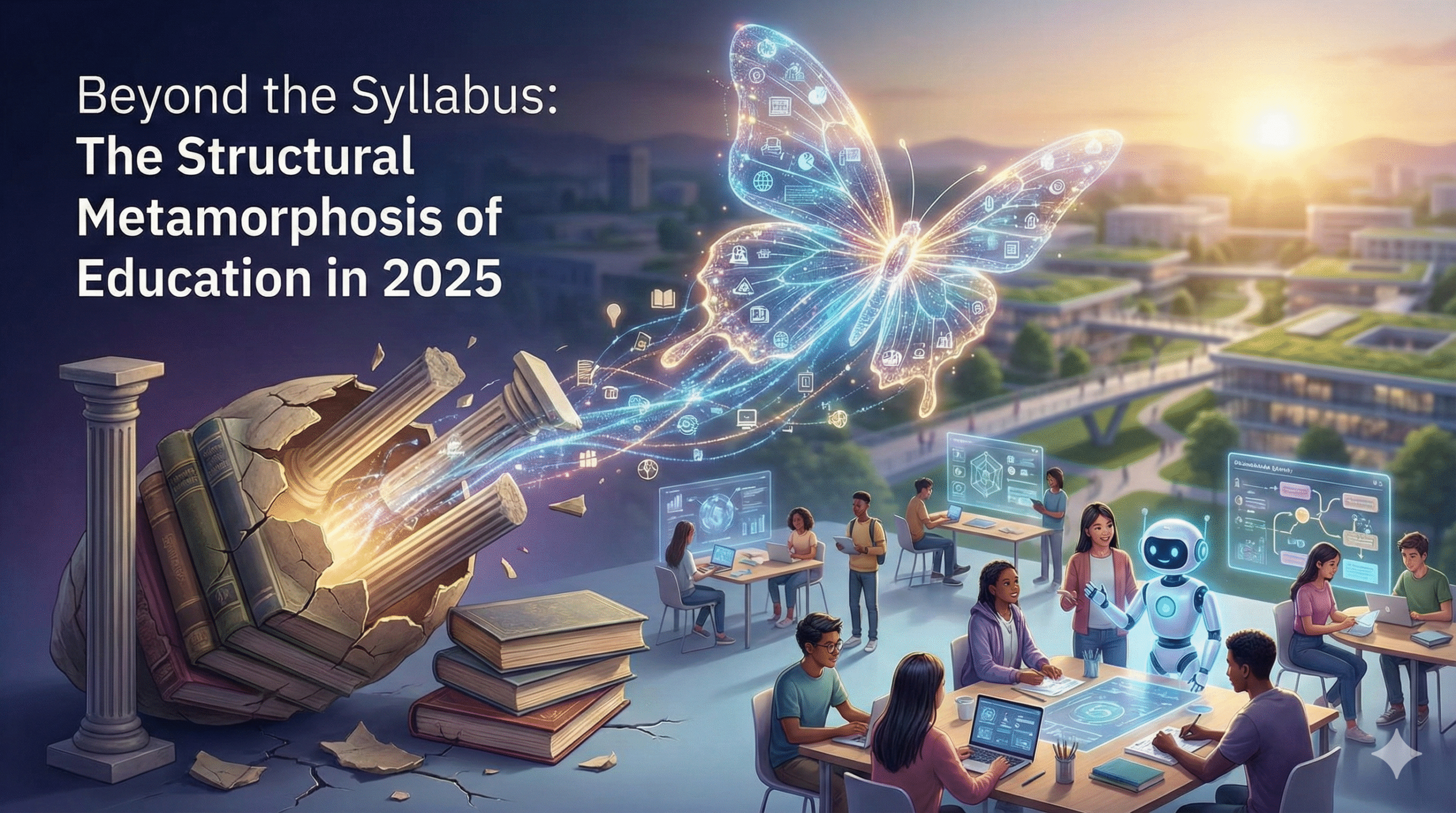
Beyond the Syllabus: The Structural Metamorphosis of Education in 2025
Beyond the Syllabus: The Structural Metamorphosis of Education in 2025 1. The Great Shift: Operationalizing Educational Intent By the close of 2025, the educational landscape had undergone a metamorphosis that was less about introducing new textbooks and more about reimagining the fundamental architecture of learning. If previous years were defined by policy announcements and ambitious frameworks, 2025 was the year of “operationalization”—the distinct moment when high-level intent finally translated into ground-level practice. Across the education system, a quiet but profound revolution occurred, shifting the focus from compliance-driven schooling to purpose-led education. 2. The New Classroom: From Syllabus Coverage to Sense-Making The most visible transformation has been the pedagogical pivot from content-heavy instruction to competency-based learning. For decades, the metric of a successful school year was syllabus coverage. In this new era, that metric has shifted to capability development. The Facilitator Model: The modern classroom has moved away from the industrial factory model—where knowledge is dispensed to passive recipients—toward an environment that prioritizes “sense-making.” Educators are no longer arguably the sole keepers of information; instead, they function as facilitators who help students understand how to think rather than just what to know. Connecting the Dots: This shift has revived an almost ancient, inquiry-based approach to learning, where students engage in experiential projects, learning by doing and through peer collaboration. The curriculum is no longer a rigid ladder to be climbed but a flexible web of interdisciplinary pathways, allowing students to connect dots between mathematics, arts, and social sciences in real-time. 3. Assessment Reform: The Shift from Judgment to Insight As pedagogy evolved, so too did the mechanisms of measurement. The education system is witnessing the slow death of the “episodic exam”—the high-stakes, one-time test that previously determined a student’s worth. In its place, a system of “continuous insight” has emerged. Diagnostic Tools: Assessment in 2025 is increasingly viewed as a diagnostic tool rather than a judgment. Schools are utilizing rubrics, extensive portfolios, and reflective journals to map a student’s growth trajectory over time. Beyond the Scorecard: By leveraging psychometrics and longitudinal data, educators can now see a panoramic view of a learner’s potential, capturing skills like critical thinking, collaboration, and adaptability that traditional marks could never quantify. This move toward skills-based evaluation is critical in ensuring that students are not just exam-ready, but life-ready. 4. Technology & AI: The Humanizing Power of Automation Parallel to these structural changes is the sophisticated integration of technology. The initial apprehension surrounding Artificial Intelligence (AI) has matured into thoughtful adoption. Rather than fearing AI as a replacement for human intellect, the education system has embraced it as a powerful equalizer and enabler. Personalization at Scale: AI tools are now routinely used to create personalized learning pathways, adapting content to the specific pace and learning style of each student. Focusing on the Human Element: This automation of administrative and content-delivery tasks has remarkably humanized the classroom. With technology handling the “drudge work,” teachers have been freed to focus on what machines cannot replicate: mentorship, empathy, and ethical guidance. 5. Holistic Development: Embedding Social-Emotional Learning (SEL) This renewed focus on the human element is most evident in the elevation of Social-Emotional Learning (SEL). In the past, “value education” was often an afterthought, relegated to a single period once a week. In the generalized scenario of 2025, SEL is embedded into the very cultural fabric of educational institutions. From conflict resolution strategies woven into group projects to daily practices of mindfulness, schools are acknowledging that academic rigor cannot exist without emotional stability. The realization that a calm classroom is a productive classroom has led to a holistic approach where mental well-being is treated with the same seriousness as academic proficiency. 6. Navigating Challenges: Change Fatigue and Alignment However, this systemic overhaul has not been without significant growing pains. The transition has placed immense pressure on the human capital of the education system. The Burden on Educators: “Change fatigue” has become a tangible challenge, as teachers are expected to evolve their skill sets faster than institutional support systems can sometimes manage. There is a delicate tension between the need for innovation and the capacity for adaptation. The Expectation Gap: Furthermore, a challenge of alignment persists; while schools sprint toward the future, they often face friction from parents and stakeholders who still view education through the lens of traditional metrics and demand the certainty of the old systems. 7. The Strategic Imperative: Integrating Early Career Awareness Perhaps the most critical “missing link” addressed in 2025 was the gap between academic learning and professional reality. Career awareness has evolved from a one-time counseling session to a continuous curriculum. Schools have realized that students cannot aspire to be what they cannot see. By integrating industry insights directly into subjects—connecting mathematics to data science or history to public policy—schools are demystifying the professional world. This approach ensures that decision-making is treated as a core skill. When students eventually leave the school gates, they are equipped not just with a certificate, but with “directional confidence,” significantly reducing the anxiety of future choices and aligning their skills with emerging market realities. 8. Conclusion: A New Definition of Leadership and Success Ultimately, the narrative of education in 2025 is one of resilience and profound redirection. Leadership within schools has transformed from administrative management to instructional mentorship, with principals and directors actively shaping the learning culture rather than just overseeing operations. The system is moving toward a future where the goal is to produce learners who are not just academically qualified, but adaptable human beings. The transition is ongoing, but the foundation has been laid for an education system that values the development of the whole human being over the mere accumulation of data. Start Your Journey Explore 100+ career paths and find detailed information about your dream job. Open Career Library Discover your strengths and get a tailored roadmap with our career assessment. Get Personalized Guidance Written by JAINODDIN MOHAMMAD Certified Career Analyst and Counsellor in International Studies Ph. 9700449221

Career Awareness Before Board Exams: Why It Matters More Than Ever
Helping students prepare not just for exams, but for life after school Career Awareness Before Board Exams: Why It Matters More Than Ever Helping students prepare not just for exams, but for life after school A Crucial Phase in Every Student’s Life Board examinations are one of the most important milestones in a student’s academic journey. Preparation is intense, expectations are high, and emotions often fluctuate between confidence and anxiety. During this phase, most attention is placed on marks, revision, and performance. However, there is another equally important aspect that often remains in the background—career awareness. Key Insight: When students understand where their education can lead, exam preparation becomes more meaningful and less stressful. Why Career Awareness Should Begin Before Exams Career awareness does not distract students from exams; instead, it gives direction to their effort. When students know how subjects connect to future opportunities, they study with purpose rather than pressure. This clarity helps students avoid last-minute confusion after results and reduces the emotional burden that often follows board examinations. Clarity: Students understand why they are studying certain subjects. Confidence: Decisions feel guided, not rushed. Continuity: The transition after exams becomes smoother. The Role of Parents During Exam Time Parents naturally focus on results, but this phase also offers an opportunity to have calm conversations about interests, strengths, and future goals. Supportive guidance helps students feel secure rather than judged. Listening patiently and encouraging exploration can make a significant difference in how students handle both exams and future decisions. Teachers as Guides Beyond the Syllabus Teachers play a crucial role during board exam preparation. Along with academic guidance, small discussions about career pathways and subject relevance can inspire students and reduce uncertainty. Such guidance reinforces the idea that education is not only about scoring marks, but about building a meaningful future. A Balanced Way Forward Exams will always remain important, but they should not be the only focus. When academic preparation is supported by career awareness, students feel empowered rather than overwhelmed. Final Thought: Career awareness before board exams turns preparation into purpose and pressure into confidence. Explore Career Support Career Guidance Personalised career guidance to help students choose the right path with confidence. What After 10th? Clear stream and subject selection guidance to avoid confusion after Class 10. Career Library Explore career options before making life-shaping decisions.

Education at a Crossroads: Exams, AI, and the Future of Indian Students
Why today’s school decisions will shape tomorrow’s careers Education at a Crossroads: Exams, AI, and the Future of Indian Students Why today’s school decisions will shape tomorrow’s careers 📌 A Silent Change Inside Indian Classrooms Across India, classrooms look the same on the surface—students preparing for exams, teachers completing syllabi, parents discussing marks, and school management tracking results. Yet beneath this routine, a powerful transformation is quietly unfolding. The core question of education is changing. It is no longer only “How much did the student score?” It has become “Is the student prepared for a future that no longer follows old rules?” This silent shift makes today’s education landscape one of the most important discussions for parents, students, teachers, and school leaders. 📝 Exams Still Matter — But They Are No Longer Enough Examinations continue to play a crucial role in Indian education. Board results influence admissions, confidence levels, and institutional reputation. For students, exams remain unavoidable milestones. For parents, they feel like judgment points. For schools, they are performance indicators. However, the reality is changing rapidly. Exams primarily test memory and repetition, while the real world now demands adaptability, problem-solving, and decision-making. A student may score high marks yet feel completely confused when asked a simple question: “What should I do after 10th or 12th?” This growing gap between academic success and life readiness is the biggest challenge facing education today. 🤖 Artificial Intelligence Has Already Entered Education Artificial Intelligence is no longer a future concept. It is already influencing how students search, write, analyse, and learn. Children are using AI tools instinctively, often without structured guidance. Parents feel unsure—Is AI helping or harming learning? Teachers feel pressured—Should AI be restricted or integrated? School leaders face a dilemma—Ignore it or lead it responsibly? The truth is simple: AI will not wait for permission to enter education. When guided properly, AI becomes a powerful learning assistant. When left unchecked, it can weaken independent thinking. The difference lies in education systems that teach students how to think, not just what tools to use. 👨👩👧 Parents Are Concerned — Not Confused Without Reason Today’s parents are more involved than ever, yet more anxious than ever. They want discipline and creativity. They want marks and confidence. They want safety and future readiness. This confusion does not come from negligence. It comes from a rapidly changing career landscape where traditional advice no longer guarantees success. Parents are silently asking: “Is my child’s education truly preparing them for real life?” Schools that understand this emotional reality build long-term trust. Those that focus only on marks risk losing relevance. 🎓 Teachers Are Carrying More Than a Syllabus Teachers today are expected to be instructors, mentors, motivators, counsellors, and technology guides—all at once. They are asked to produce results while also nurturing creativity, values, and adaptability. The challenge is not teacher capability. The challenge is alignment. When teachers are empowered with clarity, training, and purpose, transformation becomes possible. When burdened without direction, innovation gives way to exhaustion. 🏫 School Management at a Leadership Turning Point School owners and management teams are standing at a defining moment. Parents expect academic excellence and career relevance. Students expect engagement, not routine. Society expects responsible citizens, not just rank holders. Tomorrow’s successful schools will not be known only for toppers, but for how confidently their students choose careers, adapt to change, and face uncertainty. Vision, not infrastructure alone, will define educational leadership. 🧭 Career Guidance: The Missing Link in Education Career guidance is no longer an optional add-on. It is an essential part of meaningful education. Introducing career awareness early helps students: Understand their strengths and interests Connect subjects with real-world careers Avoid wrong decisions after 10th and 12th Reduce academic and emotional stress Education without career clarity often leads to regret. Education with guidance builds confidence and direction. 🚀 The Way Forward: Balance, Not Extremes The future of education does not lie in rejecting exams, replacing teachers, or surrendering to technology. It lies in balance. Strong academics supported by career awareness. AI used responsibly under human guidance. Exams treated as milestones, not identities. Education must prepare students not only to pass tests, but to handle life. 🎯 Take the Next Right Step Explore structured guidance and career clarity designed for students and parents. Career Guidance Personalised career guidance to help students choose the right path with confidence. What After 10th? Clear stream and subject selection guidance to avoid confusion after Class 10. Career Library Explore hundreds of career options before making life-shaping decisions. Education today must guide students wisely—because the future will not wait.
Daily Current Affairs – 5 January 2026
For UPSC | State PSC | SSC | Banking | Defence | Teaching Exams Daily Current Affairs – 5 January 2026 | UPSC, SSC, Banking 📘 Daily Current Affairs – 5 January 2026 For UPSC | State PSC | SSC | Banking | Defence | Teaching Exams 🇮🇳 1️⃣ National Affairs India Expresses Concern Over U.S. Military Action in Venezuela India expressed concern over the recent United States military action in Venezuela and emphasised respect for national sovereignty and international law. Why important for exams: India’s foreign policy principles, sovereignty, international law. ₹1,464 Crore Interstate Fake Billing Racket Busted in Karnataka Authorities uncovered an interstate fake billing and tax evasion racket worth ₹1,464 crore, highlighting enforcement challenges under the GST regime. Why important for exams: Economic offences, GST compliance, financial governance. Kerala Reports Rise in Hepatitis A Cases Kerala health authorities reported a rise in Hepatitis A cases and issued public health advisories to control the spread of the disease. Why important for exams: Public health management, disease prevention. New Aviation Safety Rules Restrict Power Bank Usage on Flights The aviation regulator introduced new safety rules restricting the use of power banks on flights to reduce fire-related risks. Why important for exams: Aviation safety regulations, consumer protection. 🌍 2️⃣ International Affairs Bangladesh Declines to Play T20 World Cup Matches in India Bangladesh cited security concerns and declined to play its T20 World Cup matches in India, requesting alternative venues. Why important for exams: Sports diplomacy, regional relations. Russia–Ukraine Conflict Continues Into 2026 Russia and Ukraine continued to exchange accusations over attacks on civilian infrastructure, indicating prolonged geopolitical tensions. Why important for exams: Global security, international conflict analysis. 📊 3️⃣ Economy & Financial Awareness Indian Equity Markets Extend Early-2026 Rally Benchmark indices Sensex and Nifty continued their upward movement, led by banking, auto, and metal stocks. Why important for exams: Financial markets, economic indicators. RBI Relaxes NBFC Norms for Infrastructure Lending The Reserve Bank of India eased risk-weight norms for NBFC exposure to infrastructure projects to support long-term financing. Why important for exams: Banking regulation, infrastructure finance. ⚙️ 4️⃣ Science & Technology No major science and technology announcement with exam relevance reported today. 🌱 5️⃣ Environment & Ecology No major environment-related headline with confirmed exam relevance reported today. 🎭 6️⃣ Culture & Society IIT Bombay Opens MBA Admissions for 2026 IIT Bombay announced the commencement of MBA admissions for the 2026 academic session, detailing eligibility and application timelines. Why important for exams: Higher education trends, management education. 🏆 7️⃣ Sports India Announces ODI Squad for New Zealand Series Shubman Gill was named captain of India’s ODI squad for the New Zealand series, with key inclusions and exclusions noted. Why important for exams: Sports administration, team leadership. ATP Challenger Bengaluru Open 2026 Begins The Bengaluru Open tennis tournament commenced with participation from Indian and international players. Why important for exams: International sports events hosted in India. 📈 8️⃣ Reports, Rankings & Indices No major national or international reports released today. ⚡ 9️⃣ One-Liners (Quick Revision) India reiterates respect for sovereignty amid Venezuela crisis. ₹1,464 crore fake billing racket busted in Karnataka. Kerala reports increased Hepatitis A cases. Aviation regulator restricts power bank usage on flights. Bangladesh declines to play T20 WC matches in India. RBI eases NBFC norms for infrastructure lending. Shubman Gill named India ODI captain for NZ series. Bengaluru Open tennis tournament begins. 🧠 🔟 Daily Practice MCQs India’s response to the Venezuela situation highlights which foreign policy principle? A) Military intervention B) Respect for sovereignty C) Economic sanctions D) Strategic alliance Answer: B RBI’s easing of NBFC norms primarily aims to support: A) Short-term consumer loans B) Infrastructure financing C) Agricultural subsidies D) Export promotion Answer: B The Bengaluru Open is associated with which sport? A) Badminton B) Cricket C) Tennis D) Hockey Answer: C 📌 Exam Tip: Focus on linking current affairs with static syllabus topics for better prelims and mains preparation. Prepared for UPSC, State PSC, SSC, Banking, Defence & Teaching exam aspirants. 🎯 Serious aspirants practice daily. Top rankers never skip mock tests. 🎯 Mock Tests for Government Job Competitive Exams Preparing for government exams requires more than reading theory. Regular mock tests help you understand the exam pattern, manage time, and improve accuracy. This mock test platform is designed for government job aspirants preparing for UPSC, SSC, Banking, Defence, State PSC, Teaching and other competitive exams. Click the button below to explore available test series, search your exam, and start practicing mock tests that can move you closer to your dream government job. 🧠 Explore Government Exam Mock Tests ✔ Exam-wise mock tests & test series ✔ Real exam-level questions ✔ Performance analysis & practice support ✔ Designed to help you crack your dream government job
Daily Current Affairs – 4 January 2026
For UPSC | State PSC | SSC | Banking | Defence | Teaching Exams Daily Current Affairs – 4 January 2026 | UPSC, SSC, Banking 📘 Daily Current Affairs – 4 January 2026 For UPSC | State PSC | SSC | Banking | Defence | Teaching Exams 🇮🇳 1️⃣ National Affairs Water Contamination Incident in Indore, Madhya Pradesh A water contamination incident in Indore led to multiple deaths and hospitalisations. Authorities initiated investigations and emergency measures to address public health concerns. Why important for exams: Urban governance, public health management, sanitation infrastructure. 🌍 2️⃣ International Affairs Global Reactions to Venezuela Political Crisis International reactions intensified following a United States military operation linked to the detention of Venezuelan President Nicolás Maduro, raising debates on sovereignty and international law. Why important for exams: International relations, global diplomacy, international law. Diplomatic Impact of Venezuela Crisis in Latin America The Venezuela crisis continues to influence political discourse and diplomatic relations across Latin American countries. Why important for exams: Regional geopolitics, foreign policy analysis. 📊 3️⃣ Economy & Financial Awareness Renewable Energy Tariffs Become Cheaper Than Coal in India Recent data indicates that solar and wind energy tariffs in India are now lower than the cost of new coal-based power generation, strengthening India’s clean energy transition. Why important for exams: Energy economics, sustainable development, climate policy. ⚙️ 4️⃣ Science & Technology Preparations Continue for Gaganyaan-1 Mission ISRO continues preparations for Gaganyaan-1, the uncrewed test mission of India’s human spaceflight programme scheduled for January 2026. Why important for exams: Space technology, scientific advancements in India. Global Human Spaceflight Missions in 2026 Multiple international space agencies, including NASA, have planned significant human spaceflight missions in 2026. Why important for exams: International science cooperation, space exploration. 🎯 Mock Tests for Government Job Competitive Exams Preparing for government exams requires more than reading theory. Regular mock tests help you understand the exam pattern, manage time, and improve accuracy. This mock test platform is designed for government job aspirants preparing for UPSC, SSC, Banking, Defence, State PSC, Teaching and other competitive exams. Click the button below to explore available test series, search your exam, and start practicing mock tests that can move you closer to your dream government job. 🧠 Explore Government Exam Mock Tests ✔ Exam-wise mock tests & test series ✔ Real exam-level questions ✔ Performance analysis & practice support ✔ Designed to help you crack your dream government job
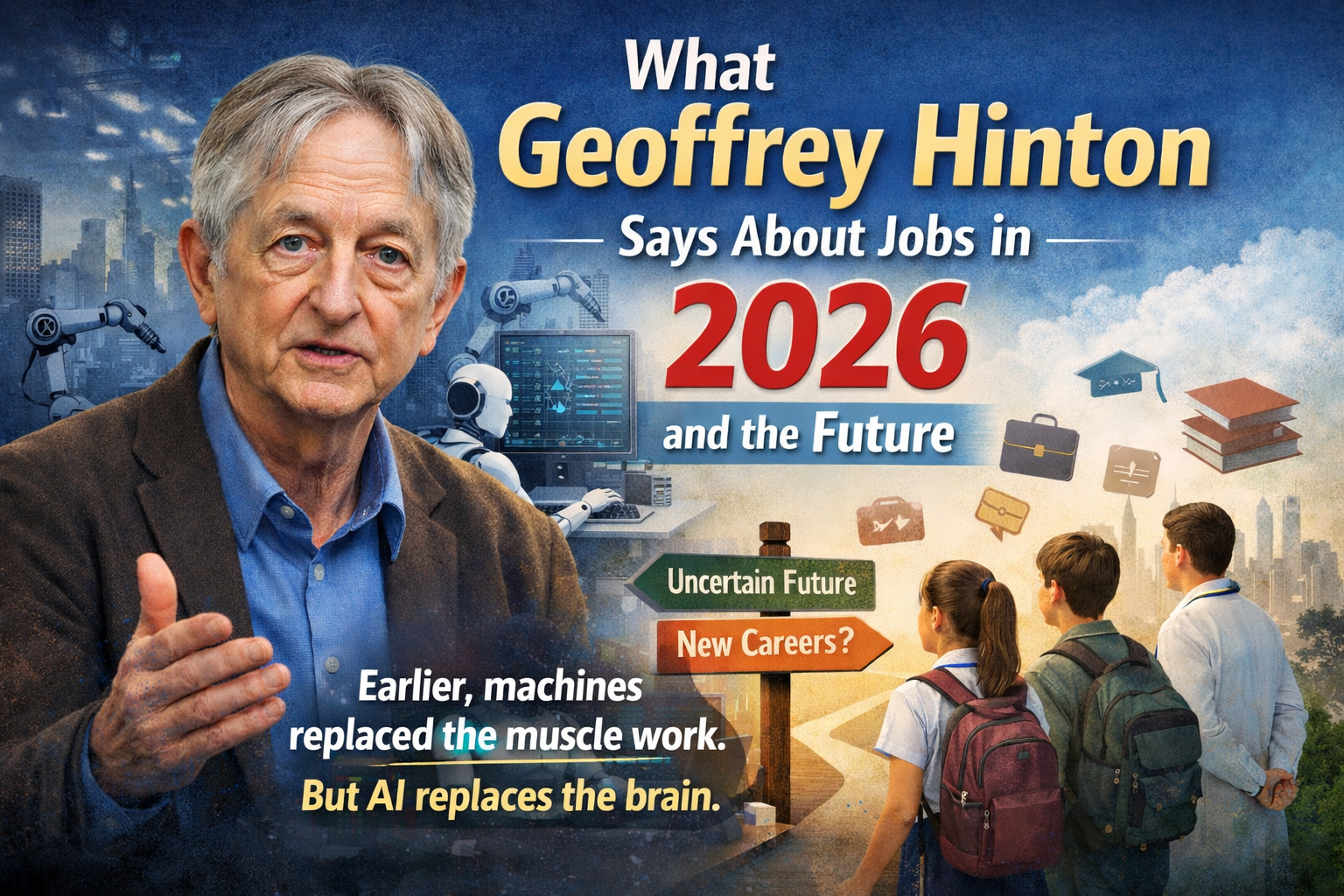
God father of AI Geoffrey Hinton says About Jobs in 2026 and the Future
“Earlier, machines replaced human muscle. Today, AI is replacing human thinking.” What Geoffrey Hinton Says About Jobs in 2026 and the Future What Geoffrey Hinton, the “Godfather of AI,” Says About Jobs in 2026 and the Future Geoffrey Hinton, one of the pioneers of artificial neural networks and deep learning, has repeatedly issued serious warnings about how Artificial Intelligence will transform jobs — not gradually, but far faster than most people expect, especially after 2026. His observations are not speculative opinions. They come from a scientist who helped build the very systems now reshaping the global workforce. What he describes has direct implications for students, parents, educators, and professionals across all sectors. 1️⃣ “This Time Is Different” — Why AI Is Not Like Past Technology Hinton strongly emphasizes that AI should not be compared with earlier technological revolutions such as computers or the internet. Earlier machines replaced muscle. AI replaces the brain. This single distinction explains why the current transformation is unprecedented. Earlier automation affected manual and physical labor AI directly affects thinking, reasoning, writing, analyzing, and coding As a result, white-collar and highly educated jobs — once considered secure — are now equally vulnerable. 2️⃣ Jobs Most at Risk by 2026–2030 According to Hinton, the first casualties of AI growth will be routine cognitive jobs — work that follows predictable patterns and rules. 🔴 High-Risk Roles Data entry and clerical work Call center and customer support roles Basic content writing Junior-level software coding Legal document review and assistance Routine accounting and bookkeeping Lecture-only teaching roles Reason: AI systems can perform these tasks faster, cheaper, and continuously without fatigue. 3️⃣ “One Person + AI = A Team” “One skilled human with AI tools can do the work of many people.” This prediction carries major consequences: Fewer overall jobs Much higher productivity Concentration of income and opportunity Illustratively: One lawyer using AI may match the output of ten junior lawyers One programmer using AI tools may replace an entire development team This leads to job polarization: highly skilled individuals advance rapidly, while average-skill workers struggle to stay relevant. 4️⃣ Jobs That Will Survive and Grow Hinton has never claimed that all jobs will vanish. Instead, he stresses that only certain types of work will remain resilient. 🟢 Roles That Combine Human Strength With AI Doctors and healthcare specialists Teachers who mentor and personalize learning Psychologists and counselors Research scientists AI ethics and safety professionals Engineers designing new systems Entrepreneurs and innovators Skilled trades such as electricians and technicians Key Insight: If a job requires deep understanding of people or the physical world, it is significantly safer. 5️⃣ Education System: The Biggest Risk Zone Hinton has openly criticized outdated education systems that continue to prepare students for yesterday’s jobs. “Training students for jobs that won’t exist is dangerous.” What Will Fail Memorization-based examinations Rote learning approaches Degree-only mindsets What Will Matter Problem-solving ability Creativity and originality Learning how to learn Early career awareness Adaptability 6️⃣ Inequality Will Increase If We Don’t Act One of Hinton’s deepest concerns is social inequality. AI benefits may concentrate within a few companies Large populations may face job displacement Governments remain largely unprepared “I’m worried we don’t have good solutions yet.” This concern is precisely why he chose to step away from corporate constraints and speak freely about AI risks. 7️⃣ What Students Should Do Now Hinton’s warnings translate into clear preparation signals: Learn AI, don’t fear it — understand how it works Use AI as a tool, not a shortcut Strengthen human skills: communication, ethics, leadership, creativity Avoid blind subject choices; early planning matters In the AI era, direction matters as much as effort. 8️⃣ Message for Parents and Educators Hinton’s warning is not panic — it is preparation. “AI will be incredibly powerful. The question is whether humans are ready.” The central question is no longer just academic performance, but whether students are being equipped for a rapidly changing world. Final Thought Jobs will not disappear overnight. However, unprepared individuals will be left behind. Education + awareness + adaptability will determine survival and success. AI will not replace humans — but humans who use AI effectively will replace those who do not. Career Guidance Career Library Career Laboratory — Education & Future of Work Desk
TOP HIGHER EDUCATION NEWS -January 3, 2026
January 3, 2026 TOP HIGHER EDUCATION NEWS – INDIA Date: January 3, 2026 | Coverage: India Higher Education Desk 1️⃣ UGC Orders Probe Into Dharamshala College Student Death The University Grants Commission (UGC) has taken suo motu cognisance of the death of a 19-year-old student, Pallavi, at Dharamshala Government Degree College in Himachal Pradesh. Three senior students have been charged under allegations of ragging and sexual harassment, while a professor has been booked for alleged physical assault. The college administration has claimed that the student was not formally enrolled after failing three subjects, a statement that has triggered nationwide concern and scrutiny. UGC has constituted an independent investigation committee to examine institutional accountability, student safety mechanisms, and compliance with anti-ragging norms. 2️⃣ NCERT Set for Deemed-to-be-University Status by End-January The Ministry of Education has confirmed that the National Council of Educational Research and Training (NCERT) is expected to receive deemed-to-be-university status within the next 15–20 days. The proposal, pending UGC clearance since its announcement in 2023, will allow NCERT to launch postgraduate and research programmes while retaining its core focus on school education, curriculum development, and teacher training. 3️⃣ Gujarat Forms 13-Member Panel to Review Public Universities Act The Gujarat government has constituted a 13-member expert committee to review the Gujarat Public Universities Act, 2020. The panel will assess governance structures, institutional autonomy, appointment processes, and academic standards across state public universities, with recommendations expected to influence future higher education reforms in Gujarat. 4️⃣ IIT Guwahati GATE 2026 Admit Cards Expected Soon IIT Guwahati is expected to release the GATE 2026 admit cards shortly on the official portal gate2026.iitg.ac.in. The release follows a brief postponement due to technical preparations. GATE remains a critical national examination for admission into MTech, ME, and PhD programmes across IITs, NITs, and premier engineering institutions. 5️⃣ President Murmu Launches AI Skilling Initiative (SOAR) President Droupadi Murmu has launched the Skilling for AI Readiness (SOAR) initiative, with continued impact across higher education institutions. The programme focuses on integrating artificial intelligence into engineering and university curricula, aiming to enhance faculty training, student employability, and India’s global competitiveness in AI-driven sectors. 6️⃣ Himachal Ragging Case Controversy Escalates The Dharamshala college case has intensified as the administration maintains that the deceased student was not officially enrolled, a claim strongly disputed by the victim’s family. Student organisations, including ABVP, have demanded a transparent and time-bound investigation, alleging administrative negligence and delayed police action. 7️⃣ Higher Education Reforms Debate Intensifies Discussions around the proposed Vikasit Bharat Shiksha Adhishthan Bill continue at the national level. The bill proposes a single higher education regulator to replace bodies such as UGC, AICTE, and NCTE. While supporters cite efficiency and standardisation, critics raise concerns over excessive centralisation and reduced university autonomy. 🗞️ Bulletin Note: The UGC probe into the Dharamshala student death dominates national headlines today. NCERT’s deemed university status signals a major policy shift in higher education. Students are advised to verify examination and admission updates only through official portals. All developments confirmed as of January 3, 2026.