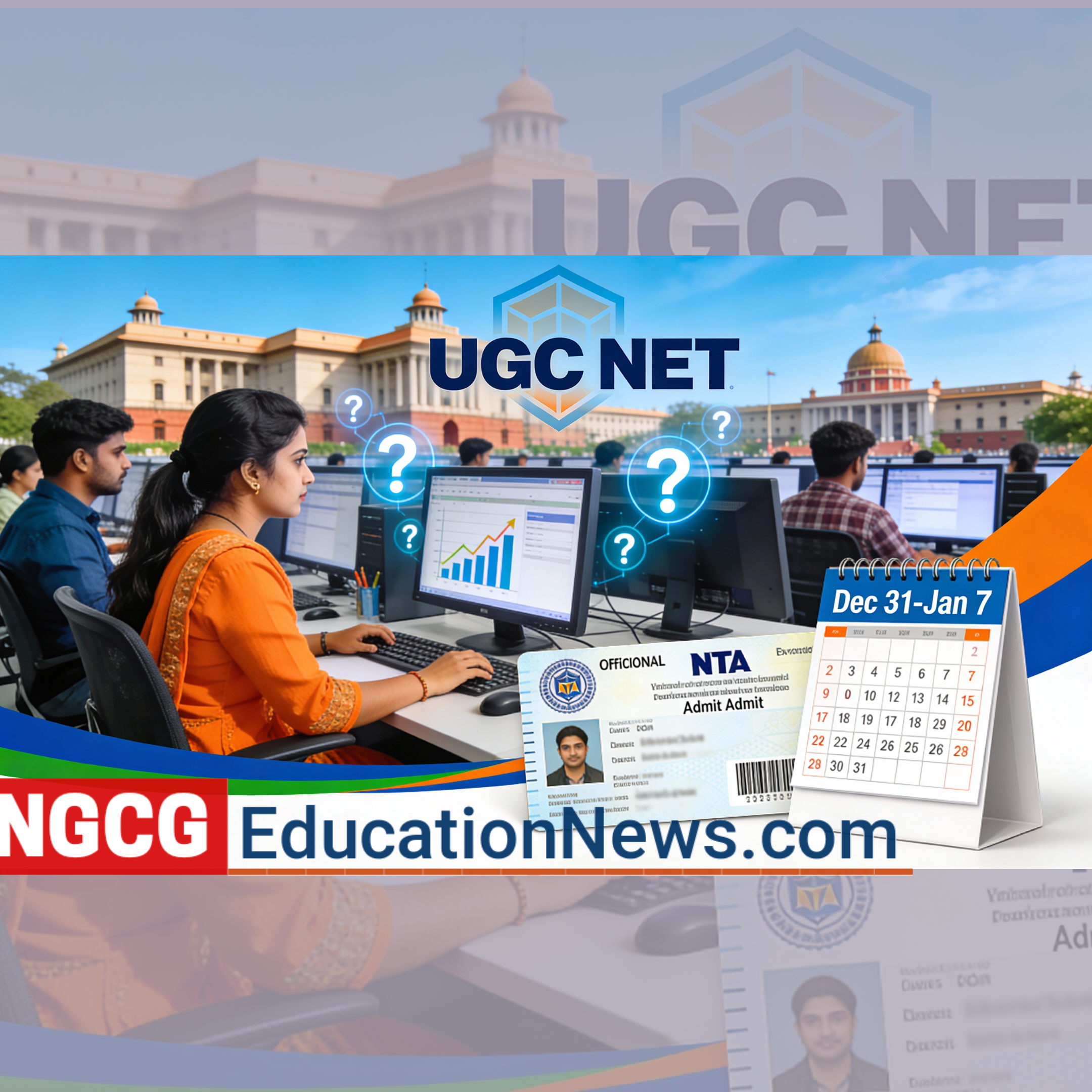
UGC NET December 2025 Kicks Off Today: Full Exam Schedule and Key Details for Aspirants Higher Education News, Dec 31, 2025 Featured: UGC NET exams begin nationwide today [generated_image:114] UGC NET December 2025 Exams Commence Nationwide: What Candidates Need to Know By Education Desk December 31, 2025 The UGC NET December 2025 examination kicked off today across India in computer-based test (CBT) mode, marking a crucial step for over 9 lakh aspirants seeking Junior Research Fellowship (JRF) and Assistant Professorship eligibility. Today’s Exam Subjects and Timings Shift 1 (9:00 AM–12:00 PM) today covers Law, Social Work, Telugu, Tourism Administration, Spanish, Prakrit, and Kashmiri. No Shift 2 scheduled for December 31. Each session features Paper 1 (general aptitude) and Paper 2 (subject-specific) in a single 3-hour window without breaks. Complete Exam Schedule Highlights Date Shift 1 Subjects Shift 2 Subjects Dec 31 Law, Social Work, Telugu, etc. – Jan 1 Economics, History Psychology, Hindi Jan 2–7 Commerce, Management, etc. Political Science, Sociology, etc. Full subject-wise schedule available on ugcnet.nta.nic.in. Admit Cards and Exam Centers City intimation slips released December 21; admit cards downloadable now. Exams at designated university centers; carry hall ticket and photo ID. MCQ format, no negative marking, bilingual (English/Hindi). Key Updates for Candidates Results expected February 2026. NTA emphasizes strict adherence to timings and protocols. This remains one of India’s largest eligibility tests for higher education faculty roles. Stay tuned for daily updates as exams progress through the new year.
CBSE Suspends Gurugram School | School Education News – Dec 31, 2025
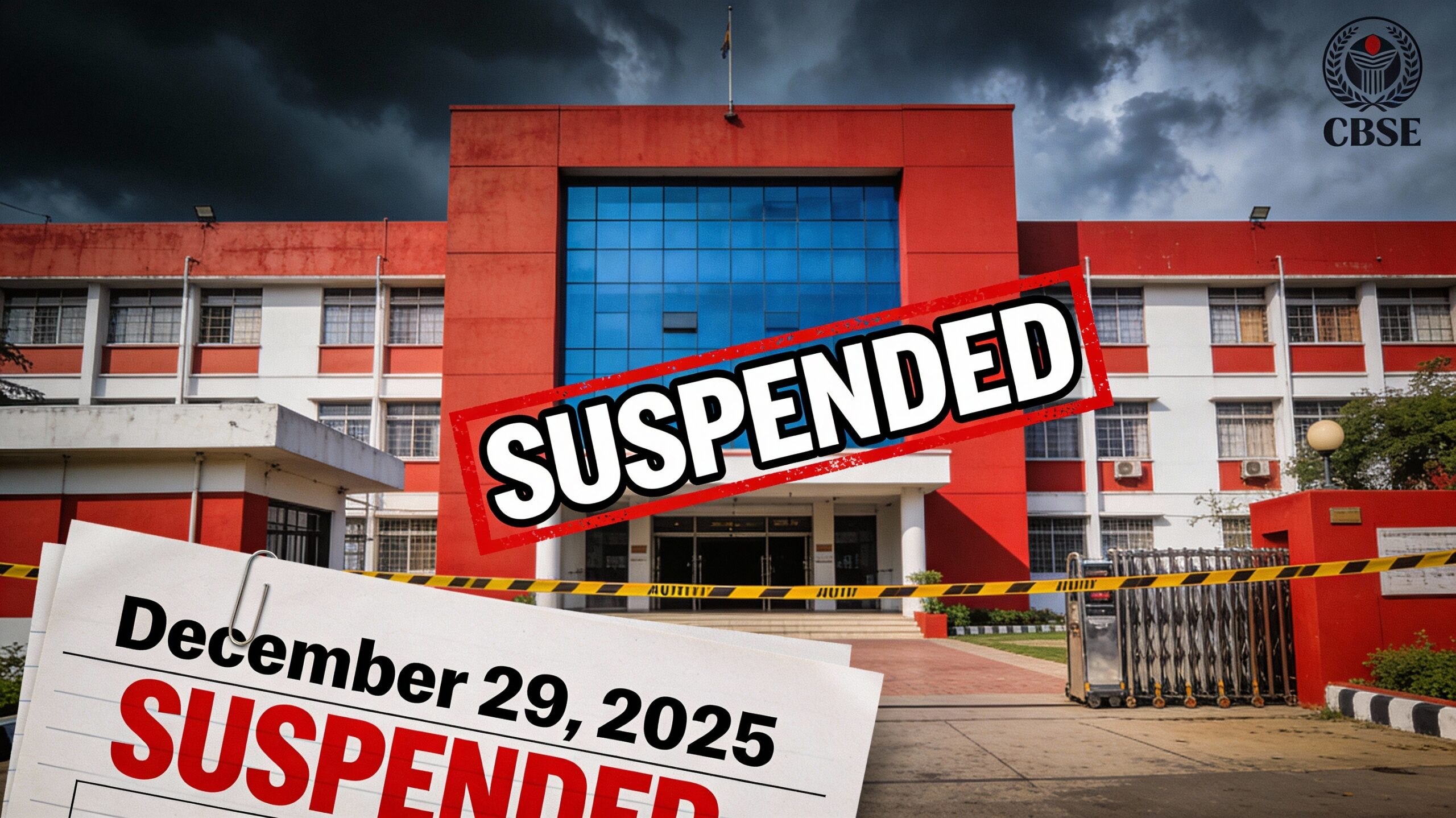
CBSE Suspends Gurugram School | School Education News – Dec 31, 2025 📰 SCHOOL EDUCATION NEWS | DECEMBER 31, 2025 CBSE Suspends Gurugram School Affiliation Latest Breaking News: Major Safety Violations Lead to One-Year Ban 📅 Published: December 31, 2025 | Category: School Education | Location: Gurugram, Haryana On December 29, 2025, India’s Central Board of Secondary Education issued a bombshell decision, suspending G D Goenka High School in Sohna, Gurugram’s affiliation for the entire 2026-27 academic year. The drastic action follows discovery of critical safety and infrastructure violations that compromised student security. 🔍 Violations Uncovered in Recent Inspection CBSE inspectors revealed the school was operating multiple institutions across all floors of the same building without proper separation. Key violations included: No mandatory six-foot pucca boundary wall Shared entry/exit points creating safety hazards Absence of dedicated Composite Science Laboratory Incomplete documentation violating Affiliation Bye-Laws 2018 The shared campus setup with other schools and university programs posed serious risks to over hundreds of students daily. ⚖️ Strict Compliance Orders Mandated CBSE’s official order demands immediate action: Complete disengagement of all other institutions from premises Construction of proper boundary walls and separate access points Exclusive campus use dedicated solely to school students No resource or staff sharing permitted While current students in Classes 9-12 can complete their studies, no new admissions to Classes 9 or 11 will be allowed during the suspension period. 🚨 Nationwide Warning to Schools This high-profile case signals CBSE’s zero-tolerance policy for safety lapses. The board granted a sympathetic one-year rectification period considering existing students’ interests, but emphasized schools must prioritize secure, exclusive learning environments. Education authorities across India are watching closely as this precedent could trigger similar inspections nationwide. Schools sharing infrastructure now face heightened scrutiny ahead of the 2026 academic session. 🔔 Stay Updated: Follow for daily school education news, exam alerts, and policy updates

SCHOOL EDUCATION NEWS: 30 December, 2025.
SCHOOL EDUCATION NEWS – 30 December 2025 News SCHOOL EDUCATION NEWS – 30 December 2025 Coverage: Telangana | India By Education Desk Reporter 1️⃣ TELANGANA – SCHOOL EDUCATION HEADLINES Over 2,000 state-run schools reported zero student enrollment in the 2024-25 academic year, up from 3,576 schools with fewer than 10 students in 2022-23. Telangana Education Commission submitted a report on school reforms, recommending remedial classes, career guidance, and Telangana Public Schools for practical skills. Schools observed Christmas break from December 23-27, with Christian-minority schools extending to December 28; regular classes resumed post-holidays. Academic calendar sets Formative Assessment 3 (FA3) completion by December 23 for most classes; TS SSC exams scheduled for March 2026. More than 5,000 government schools had zero or low enrollment by 2024-25, prompting concerns over infrastructure and student migration. Telugu made compulsory from Classes 1-10 in CBSE, ICSE, and other boards for 2025-26 academic year. Parent Advisory: Verify enrollment status and academic progress via school portals before January assessments. School Management Note: Conduct compliance checks for low-enrollment schools per department guidelines. 2️⃣ INDIA – NATIONAL SCHOOL EDUCATION NEWS Uttar Pradesh closed all schools up to Class 12 until January 1, 2026, due to severe cold wave and fog; applies to CBSE, ICSE, UP Board. Delhi NCR schools remained shut on December 30 amid extreme cold and pollution; possible extensions based on weather updates. CBSE scheduled practical exams for Classes 10-12 in winter-bound schools from November 6 to December 6, 2025. Department of School Education observed Veer Bal Diwas on December 26 to promote resilience and critical thinking among students. Pre-board exams for CBSE and ICSE underway in December-January across schools, ahead of 2026 board exams starting February 15. PM SHRI Schools observed winter break from December 23 to January 1, 2026. Student Advisory: Use holiday period for syllabus revision and pre-board practice per school schedules. 3️⃣ STATE-WISE SCHOOL EDUCATION HIGHLIGHTS Uttar Pradesh: Schools closed till January 1 due to cold; pre-board exams proceed as planned. Parent Action: Monitor district orders for extensions. Delhi: Closure extended for safety amid fog; hybrid modes considered for continuity. Punjab: Winter vacations from late December into early January; timings adjusted to 9:30 AM-3:30 PM where open. Haryana: Vacations start January 1; 22 PM SHRI and Model Sanskriti schools designated as sports excellence centers. 4️⃣ WHY THIS MATTERS (Parents, Students & Schools) Cold wave closures in northern states disrupt schedules, requiring online continuity for assessments. Parents face planning challenges for supervision during extended breaks. Telangana’s enrollment issues highlight need for retention strategies amid normal operations. Schools must ensure compliance with inspections and digital tools for equity. 5️⃣ INSIGHT FOR ACADEMIC & CAREER AWARENESS Winter breaks offer time to build independent study routines and review weak areas. Adapt to weather disruptions by prioritizing health alongside revision. Consistent practice ensures readiness for March board exams. SOURCES: Times of India, Indian Express, Jagran Josh, Telangana Today, New Indian Express, CBSE official site.

BHU Arts Faculty Lands Historic ₹8 Crore Global Grant – Huge Win for Indian Students!
BHU Arts Faculty Lands Historic ₹8 Crore Global Grant – Huge Win for Indian Students! ₹8 Crore Erasmus+ Victory: BHU Faculty of Arts celebrates landmark funding with international partners, opening global doors for Indian humanities students 🚀 BHU Arts Faculty Lands Historic ₹8 Crore Global Grant – Huge Win for Indian Students! 📅 December 29, 2025 Breaking news for parents and educators: Banaras Hindu University’s Faculty of Arts just achieved a massive milestone – securing ₹8 crore through the prestigious Erasmus+ program. This record-breaking grant, the largest in BHU’s history, comes from strategic partnerships with leading international universities and unlocks incredible opportunities for research, faculty exchanges, and student mobility programs. Why This Matters for Your Child’s Future: In an era where humanities often take a backseat to STEM, BHU proves arts degrees can compete globally – without the massive costs of full study-abroad programs. This funding creates real pathways to international exposure right from Indian campuses. 🎯 Top Benefits Rolling Out Soon: 🌍 World-Class Research Labs: New centers blending Indian cultural heritage with European research methodologies on sustainability, heritage preservation, and global challenges 👨🏫 Expert Faculty Upgrades: Professors gaining international residencies, bringing cutting-edge teaching methods back to BHU classrooms ✈️ Free Study Abroad Slots: Merit-based semester programs in Europe with full scholarships covering travel, accommodation, and tuition fees 💻 Future-Ready Skills: Training in digital humanities, AI applications in arts, and flexible NEP 2020-aligned multidisciplinary courses 📋 Action Steps for Parents & Educators ✅ Application Alerts: Mark February-March deadlines for Erasmus+ opportunities. Language skills (French/German) give major advantage 🎓 Rethink Humanities: These programs lead to UNESCO projects, international NGOs, cultural diplomacy, and global consulting roles 📞 Counselor Connect: Help students build competitive profiles NOW for elite international programs Guide My Child’s Application → 🌟 The Bigger Picture This landmark grant positions BHU as a blueprint for Indian universities chasing global partnerships under NEP reforms. With India’s youth demanding employable skills, initiatives like this bridge the academia-industry gap and prove humanities deliver ROI beyond traditional expectations. Parents: It’s time to celebrate humanities! This ₹8 crore victory shows arts students can go global while staying rooted. The future of Indian education just got brighter.
School Education News Updates 29 December,2025
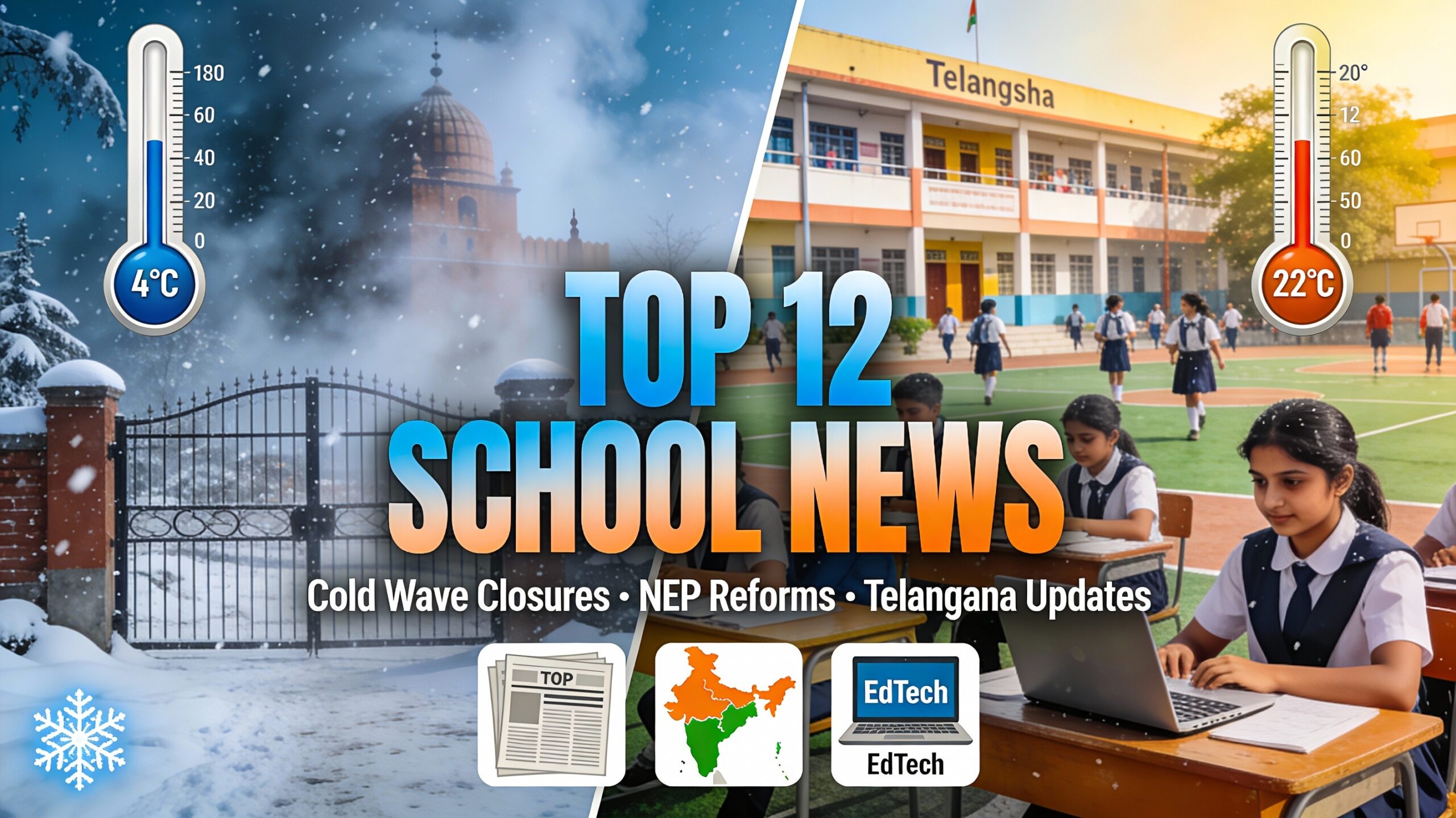
Top 12 School Education News Updates – December 29, 2025 | NextGenCareerGuide 🚨 Top 12 School Education News Updates December 29, 2025 | Cold Wave Closures, NEP Reforms & Telangana Updates LIVE UPDATES FOR PARENTS & EDUCATORS 1 Uttar Pradesh: Complete School Shutdown Till January 1 Chief Minister Yogi Adityanath ordered ALL schools (Nursery-Class 12) closed across UP until January 1, 2026 due to severe cold (4-8°C) and dense fog in 75 districts. CBSE/ICSE/UP Board schools affected. District Magistrates empowered for extensions or online classes. Zero tolerance for safety lapses with night shelters mandated for blankets, hot meals, and heating. Impact: 2.5 crore students | Pre-boards delayed 2 Bihar: Classes 1-8 Closed Till Dec 30, Seniors Continue Exams Patna Division (Patna, Nalanda, Saharsa) suspended junior classes till Dec 30 amid 7°C temperatures & IMD yellow fog alerts. Classes 9-12 operate 10 AM-3:30 PM for board exam prep. Private schools follow; hybrid learning recommended for younger students’ health protection. Over 2 crore students affected across 38 districts 3 Jharkhand: Ranchi & Statewide Closure Till Dec 31 Under Section 163 BNSS, ALL KG-Class 12 schools closed till Dec 31 as Ranchi records 8-10°C with moderate fog. Pre-board exams proceed uninterrupted via revised schedules. DC orders prioritize child safety per IMD warnings affecting 40 lakh students. 4 Telangana: Schools Regular Despite North India Cold Wave Telangana schools operate normally with 22-28°C temperatures. Hyderabad, Warangal continue regular timings while northern states shut down. SCERT pushes NEP-aligned winter curriculum focusing on competency-based assessments for Classes 8-10. Parents advised to prepare for CUET/JEE prep during holidays elsewhere. 5 Himachal Pradesh: Snowfall Extends Holidays Till Jan 5 Shimla, Kullu, Mandi schools closed till Jan 5 (-2°C, heavy snow). High-altitude Lahaul-Spiti indefinite closure. Education Directorate links to NEP flexible scheduling with catch-up classes planned. Affects 5 lakh hill students. 6 UP: Daily Newspaper Reading Now COMPULSORY in Assemblies From Dec 23, ALL govt schools allocate 10-min sessions for Hindi/English newspapers. Students note 5 new words daily on boards, discuss headlines, compile quarterly magazines. Boosts GK, vocabulary, UPSC/JEE prep per NEP reducing rote learning. 7 Delhi: 1 Lakh+ Teachers Get Fresh NEP Online Training SCERT relaunched NISHTHA, CPD, nano-courses Dec 27 for teachers/principals. NEP nodal teachers complete 3-day modules on experiential learning. Hybrid access transforms classrooms into curiosity hubs post-COVID. 8 Kanpur Sets Precedent: 2-Day Closure Before State Order Kanpur closed ALL schools Dec 19-20 (5°C extreme cold). Varanasi adopted 10:30 AM timings. Local admins conduct daily weather reviews, highlighting decentralized decision-making. 9 NEP 2025: Biannual Boards & 30% Rote Reduction Nationwide Twice-yearly board exams from 2026 emphasize skills over marks. NCERT framework mandates projects, AI remediation tools. Perfect alignment for career counseling focus on competency-based pathways. 10 4 Major 2025 Bills Transform School Ecosystems New laws standardize teacher training, regulate EdTech, reform assessments, boost funding. Address coaching culture, rural-urban gaps for 25 crore schoolchildren per NEP vision. 11 Telangana EdTech Push: Digital Classrooms for 2026 State accelerates private school digital transformation with fee regulation. Focus on AI-personalized learning platforms for Classes 8-12, aligning with your career guidance mission. 12 National Trend: 15 States Adjust School Operations Rajasthan, Haryana, Punjab revise timings to 10 AM. Southern states (AP, Telangana, Karnataka) normal operations. NEP flexibility tested nationwide with hybrid learning surge. NextGenCareerGuide | Empowering Students Grades 8-12 | Career Counseling & Educational Reforms 📱 Share on WhatsApp | 🔗 Follow for Daily Updates | For Schools & Parents

Complete Guide to AIFSET 2026: Your Gateway to a Career in Forensic Science
Complete Guide to AIFSET 2026: Your Gateway to a Career in Forensic Science What is AIFSET? The All India Forensic Science Entrance Test (AIFSET) is the national-level online exam that opens doors to BSc and MSc degrees in Forensic Science, Cyber Forensics, Crime Science & Criminology, and Cyber Security. More than 50 private universities nationwide accept AIFSET scores for admission. Important Dates for AIFSET 2026 Make sure to adhere to these deadlines to avoid missing the opportunity. Eligibility Criteria To be eligible for the BSc programs under AIFSET 2026, candidates must: How To Apply for AIFSET 2026 Follow these easy steps to submit your application online: Exam Pattern and Syllabus How to Prepare Effectively for AIFSET Successful preparation is key to excelling in the AIFSET exam. To support your journey, consider using NextGen EduHub, a trusted educational platform accessed by millions. It offers an extensive range of test series covering AIFSET and many other entrance exams, complete with detailed explanations for every question. The platform includes mock tests, current affairs, and exam updates tailored to forensic science aspirants. What’s even better? It provides in-depth performance analysis, personalized learning plans, and the flexibility to learn at your own pace — all at a very affordable cost. Harness the power of technology and expert-designed tests on NextGen EduHub for a confident and comprehensive AIFSET 2026 preparation! Check the website: https://nextgeneduhub.org Top Participating Colleges & Institutes Course Fees & Total Investment Skills Needed for a Successful Career Career Roles After Graduation Graduates can work as: Salary Expectations Frequently Asked Questions (FAQs) 1. What devices can I use for the exam?You can take the exam on a desktop, laptop, tablet, or smartphone with internet access. 2. Is there negative marking?No negative marking for wrong answers. 3. How many attempts are allowed for AIFSET?Candidates can attempt the exam a maximum of 3 times. 4. Can I apply if I am a final-year 12th student?Yes, final-year students can apply. 5. Where will I get study materials?Official syllabus and sample papers are available at the AIFSET website. Useful Resources 1. Official website : https://aifset.com/ 2. For Preparation : https://nextgeneduhub.org/ 3. For Mock tests : https://nextgeneduhub.org/tests/2343/ugc-net-forensic-science Conclusion AIFSET 2026 is the stepping stone for students aspiring to build a career in forensic science. With proper preparation and timely application, you can enter this dynamic field that combines science, law, and technology for the greater good of society.

Teach Children to Become Happy, Not Rich
In today’s fast-paced, success-driven society, the pressure to achieve financial success can often overshadow the importance of genuine happiness. As parents, our greatest aspiration should be to raise children who are content, compassionate, and resilient—individuals who find joy in the journey, not just the destination. Here’s why and how we can prioritize happiness over wealth in our parenting. The Pitfalls of Pursuing Wealth While financial stability is undeniably important, equating success solely with wealth can lead to several pitfalls: 1. **Materialism**: An excessive focus on accumulating wealth can breed materialism, making children value possessions over experiences and relationships. 2. **Stress and Anxiety**: The relentless pursuit of money can cause immense stress and anxiety, leading to mental health issues. 3. **Lack of Fulfillment**: Many financially successful individuals report feeling unfulfilled because their achievements don’t align with their passions or values. The Benefits of Fostering Happiness Encouraging children to prioritize happiness can have profound benefits: 1. **Mental and Emotional Well-being**: Happy children are more likely to grow into well-adjusted adults with a positive outlook on life. 2. **Resilience**: Happiness fosters resilience, enabling children to navigate life’s challenges with optimism and determination. 3. **Healthy Relationships**: Content individuals tend to form stronger, more meaningful relationships, which are crucial for long-term well-being. How to Teach Children to Prioritize Happiness 1. **Model Happiness**: Children learn by observing their parents. Show them that happiness comes from within, through gratitude, mindfulness, and positive thinking. 2. **Value Experiences Over Possessions**: Encourage activities that bring joy and create lasting memories, such as family outings, hobbies, and volunteer work, rather than focusing on buying the latest gadgets or clothes. 3. **Teach Gratitude**: Regularly practice gratitude as a family. This can be through gratitude journals or simply discussing things you are thankful for at the dinner table. 4. **Foster Connections**: Emphasize the importance of relationships. Teach children to build and maintain strong, supportive friendships and to be empathetic and kind to others. 5. **Encourage Passion and Interests**: Support your child’s interests and passions, even if they are not lucrative. Doing what they love will bring them joy and satisfaction. 6. **Promote Balance**: Teach children the importance of a balanced life. Ensure they understand that while working hard is important, so is relaxation, play, and spending time with loved ones. 7. **Educate About Money Wisely**: While teaching financial literacy is important, frame it in a way that shows money as a tool for achieving goals, not the ultimate goal itself. Highlight the role of money in facilitating experiences and security, rather than defining success. Conclusion Raising children to be happy rather than rich involves a shift in perspective. It requires valuing emotional well-being, fostering meaningful relationships, and encouraging passions. By prioritizing happiness, we can help our children lead fulfilled, balanced lives and ultimately redefine what it means to be truly successful.

The Problem with Chasing Marks, Instead of Knowledge: Prioritizing Knowledge Over Marks:
Prioritizing Knowledge Over Marks: The Key to join in Nextgencareerguide to get Success In today’s education system, there is often an overwhelming emphasis on achieving high marks. Students, parents, and educators alike can become preoccupied with scores, leading to stress and burnout. However, it is crucial to shift our focus from merely obtaining high grades to genuinely understanding and mastering the subject matter. By prioritizing knowledge, not only do students gain a deeper comprehension of the material, but high marks often follow naturally as a byproduct of this mastery. The Problem with Chasing Marks When the primary goal is to achieve high marks, the learning process can become superficial. Students may resort to rote memorization, cramming for exams, or even cheating, all of which undermine true learning. This approach can lead to several issues: 1. Short-Term Retention Information learned solely for the purpose of passing a test is often quickly forgotten after the exam. 2. Lack of Deep Understanding Without a solid grasp of the fundamentals, students may struggle with more advanced concepts later on. 3. Increased Stress and Anxiety: The pressure to achieve high marks can lead to mental health issues, including anxiety and depression. Benefits of Focusing on Subject Knowledge 1. Long-Term Retention and Application: When students focus on understanding concepts, they retain information longer and can apply it in various contexts. 2. Critical Thinking and Problem-Solving: Deep knowledge of a subject enhances critical thinking and problem-solving skills, which are valuable in both academic and real-world scenarios. 3. Intrinsic Motivation: A genuine interest in learning can cultivate a lifelong love of knowledge, making education a more enjoyable and fulfilling experience. How to Foster a Knowledge-Centric Approach 1. Encourage Curiosity and Exploration – Allow students to explore topics that interest them, even if they are outside the standard curriculum. This can foster a love for learning and motivate them to delve deeper into subjects. 2. Promote Active Learning Techniques – Use teaching methods that encourage active engagement with the material, such as discussions, projects, and hands-on activities. This helps students understand and retain concepts better. 3. Provide Real-World Context – Relate academic content to real-world applications. When students see the relevance of what they are learning, they are more likely to be interested and invested in the subject matter. 4. Emphasize Understanding Over Memorization – Encourage students to ask questions and seek clarification when they do not understand something. This approach promotes a deeper comprehension of the material. 5. Cultivate a Growth Mindset – Teach students that intelligence and abilities can be developed through effort and perseverance. This mindset helps them view challenges as opportunities to learn and grow. Role of Parents and Educators Parents and educators play a critical role in shifting the focus from marks to knowledge. They can: 1. Set Realistic Expectations: Encourage children to do their best, but emphasize the importance of learning and improvement over achieving perfect grades. 2. Celebrate Effort and Progress Acknowledge the hard work and progress students make, regardless of the final grade. 3. Model Lifelong Learning: Show enthusiasm for learning new things and share your own learning experiences with students. Conclusion While high marks can open doors to academic and career opportunities, they should not be the sole focus of education. By prioritizing subject knowledge, students not only achieve better academic outcomes but also develop the skills and mindset needed for lifelong success. Let’s redefine success in education by valuing deep understanding and genuine learning above all else.

Why Do Children Lie? How the parents are responsible and Understanding the Causes and Solutions
Why Do Children Lie? Understanding the Causes and Solutions Lying in children is a common yet concerning behavior for many parents. Understanding why children lie and how parents might inadvertently contribute to this behavior is crucial for fostering honesty and trust in the parent-child relationship. Here, we delve into the reasons behind children’s lies, the parental role in this dynamic, and effective strategies to encourage truthfulness. Reasons Why Children Lie 1. Fear of Punishment: Children often lie to avoid consequences. If they believe telling the truth will lead to punishment, lying can seem like a safer option. 2. Desire for Attention: Sometimes, children lie to get attention, especially if they feel overlooked or crave more interaction with their parents. 3. Imitation: Children learn by observing adults. If they see parents or other influential figures lying, they may mimic this behavior. 4. Boosting Self-Esteem: Exaggerating stories or accomplishments can be a way for children to feel more important or capable in the eyes of others. 5. Avoiding Disappointment: To prevent letting their parents down, children might lie about their achievements or behavior. Parental Role in Children’s Lies 1. Reaction to Honesty: How parents react to the truth significantly impacts whether children feel safe being honest. Harsh punishments can discourage truth-telling. 2. Modeling Behavior: Parents who lie, even about small things, set a precedent for their children. Demonstrating honesty is crucial. 3. Communication: Lack of open, non-judgmental communication can lead children to lie out of fear or misunderstanding. 4. Expectations: Unrealistic expectations can pressure children to lie to meet these standards or avoid failure. Strategies to Overcome Lying 1. Create a Safe Environment: Encourage honesty by making it clear that telling the truth is valued and that they won’t face extreme consequences for doing so. 2. Model Honesty: Be a role model of truthful behavior. Children are more likely to be honest if they see their parents practicing honesty. 3. Reinforce Positive Behavior: Praise and acknowledge your child’s honesty. Positive reinforcement can encourage them to continue being truthful. 4. Understand the Underlying Causes: Address the root causes of lying. If a child lies out of fear, work on creating a more understanding and supportive environment. 5. Open Communication: Foster open dialogues where children feel comfortable discussing their feelings and experiences without judgment. 6. Teach Consequences: Help children understand the natural consequences of lying, such as loss of trust, rather than imposing punitive measures. 7. Set Realistic Expectations: Ensure that your expectations are age-appropriate and achievable, reducing the pressure to lie to meet them. Conclusion Understanding why children lie and recognizing the parental role in this behavior is the first step towards fostering honesty. By creating a safe, supportive environment and modeling truthful behavior, parents can help their children develop the confidence and trust necessary to be honest. Open communication, positive reinforcement, and addressing the underlying causes of lying are essential strategies for nurturing a truthful and trusting relationship with your child.

Why Appearance Matters for School going children- The Role of Parents
The Importance of a Child’s Appearance in School: A Guide for Parents In today’s world, a child’s appearance when going to school holds significant importance, impacting not only their self-esteem but also how they are perceived by peers and teachers. As parents, fostering good habits around personal grooming and appearance can be an essential aspect of effective parenting. This blog will explore why a child’s appearance matters, the role parents play, and practical tips for nurturing these habits. Why Appearance Matters 1. Self-Esteem and Confidence: A well-groomed child often feels more confident and self-assured. This confidence can translate into better social interactions and a positive attitude toward learning and participation in school activities. 2. First Impressions: Teachers and peers often form initial impressions based on a child’s appearance. A neat and tidy look can set a positive tone, fostering respect and setting the stage for productive relationships. 3. Health and Hygiene: Good grooming habits, such as regular bathing, brushing teeth, and wearing clean clothes, are integral to maintaining a child’s health. These habits can prevent illnesses and contribute to overall well-being. The Role of Parents Parents are the primary role models for their children and play a crucial role in instilling good grooming and dressing habits. Here’s how parents can practice good parenting in this context: 1. Lead by Example: Children often emulate their parents. By maintaining personal grooming standards, parents can set a positive example for their children to follow. 2. Establish Routines: Create and maintain daily routines for activities like bathing, brushing teeth, and choosing outfits for school. Consistency helps children develop these habits as part of their daily life. 3. Teach Independence: Encourage children to take responsibility for their appearance. Start with simple tasks, such as choosing their clothes or brushing their hair, and gradually give them more responsibilities as they grow. 4. Positive Reinforcement: Praise and positive reinforcement can go a long way. Acknowledge your child’s efforts in maintaining good hygiene and dressing neatly, reinforcing these behaviors. 5. Educational Conversations: Have open discussions about the importance of personal hygiene and appearance. Explain how it affects their health, social interactions, and self-confidence. 6. Provide Necessary Resources: Ensure your child has access to the necessary grooming products and appropriate clothing. This includes regular visits to the dentist, haircuts, and having clean, suitable school uniforms or outfits. Practical Tips for Parents 1. Organize Ahead: Help your child pick out their clothes the night before to avoid morning rush and ensure they have clean and appropriate outfits ready. 2. Create a Checklist: Develop a simple morning checklist that includes tasks like brushing teeth, combing hair, and washing their face. This can help younger children remember their routines. 3. Teach the Basics: Educate your child on basic grooming skills, such as how to properly brush their teeth, wash their face, and comb their hair. 4. Encourage Cleanliness: Make sure your child understands the importance of wearing clean clothes and regularly washing hands, especially after using the restroom and before meals. 5. Make It Fun: Turn grooming routines into a fun activity. Use songs, games, or reward systems to make the process enjoyable for younger children. Conclusion A child’s appearance in school is more than just about looking good; it’s about feeling good and being healthy. As parents, it’s our responsibility to guide and support our children in developing good grooming habits. By leading by example, establishing routines, and encouraging independence, we can help our children feel confident, respected, and ready to take on the world. Good parenting in this regard not only prepares children for school but also sets them up for lifelong success.